Vision & Purpose
Gen:Thrive is a collaborative initiative that provides shared data and technology tools to accelerate sustainability education and advance health, equity, and climate resilience in K-12 schools.
Joining forces across all states and sectors, Gen:Thrive builds our field’s capacity to share information, explore local community needs, identify partnership opportunities, and amplify resources that are focused on environmental literacy, climate justice, healthy school buildings, outdoor learning, and green workforce development.
Gen:Thrive provides the information and insights needed to foster the next generation of sustainability leaders by building meaningful and practical technology tools that achieve the following goals:
Increase Support
Use data visualization to create compelling value propositions, expand audiences, and drive new resources to the movement.
Understand the Movement
Map environmental literacy programs and correlate to data indicators for equity and climate vulnerability.
Build Strategic Alliances
Bolster connectivity among K-12 program providers and identify opportunities to partner and accelerate collective impact.

History of Gen:Thrive
Gen:Thrive is a collaborative initiative organized and led by EcoRise, a nonprofit organization working at the intersection of K-12 sustainability education, climate resilience, and environmental justice. EcoRise offers a range of curricula and programs for students, teachers, school districts, and partners that are designed to advance environmental literacy, promote sustainable schools, and provide equitable access to green career pathways.
In 2019, EcoRise launched Gen:Thrive as a pilot project in Texas with the vision of building tools that could expand to serve communities across the country. With participation and feedback from over 1,500 organizations, Gen:Thrive has partnered with 30 states to create interactive dashboards, resource directories, and climate equity maps – and aims to serve the entire nation by the end of 2025.
The early development and growth of this project would not be possible without technical support from the University of Texas at Austin’s Texas Advanced Computing Center and from UT’s Planet Texas 2050 team and early philanthropic investments from the Pisces Foundation, the Cynthia and George Mitchell Foundation, and the Environmental Fund of Texas, and the Meadows Foundation.
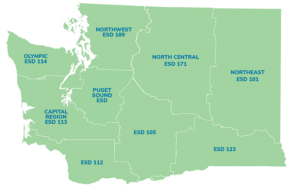 Please select the district(s) your located in. Used this map for reference.